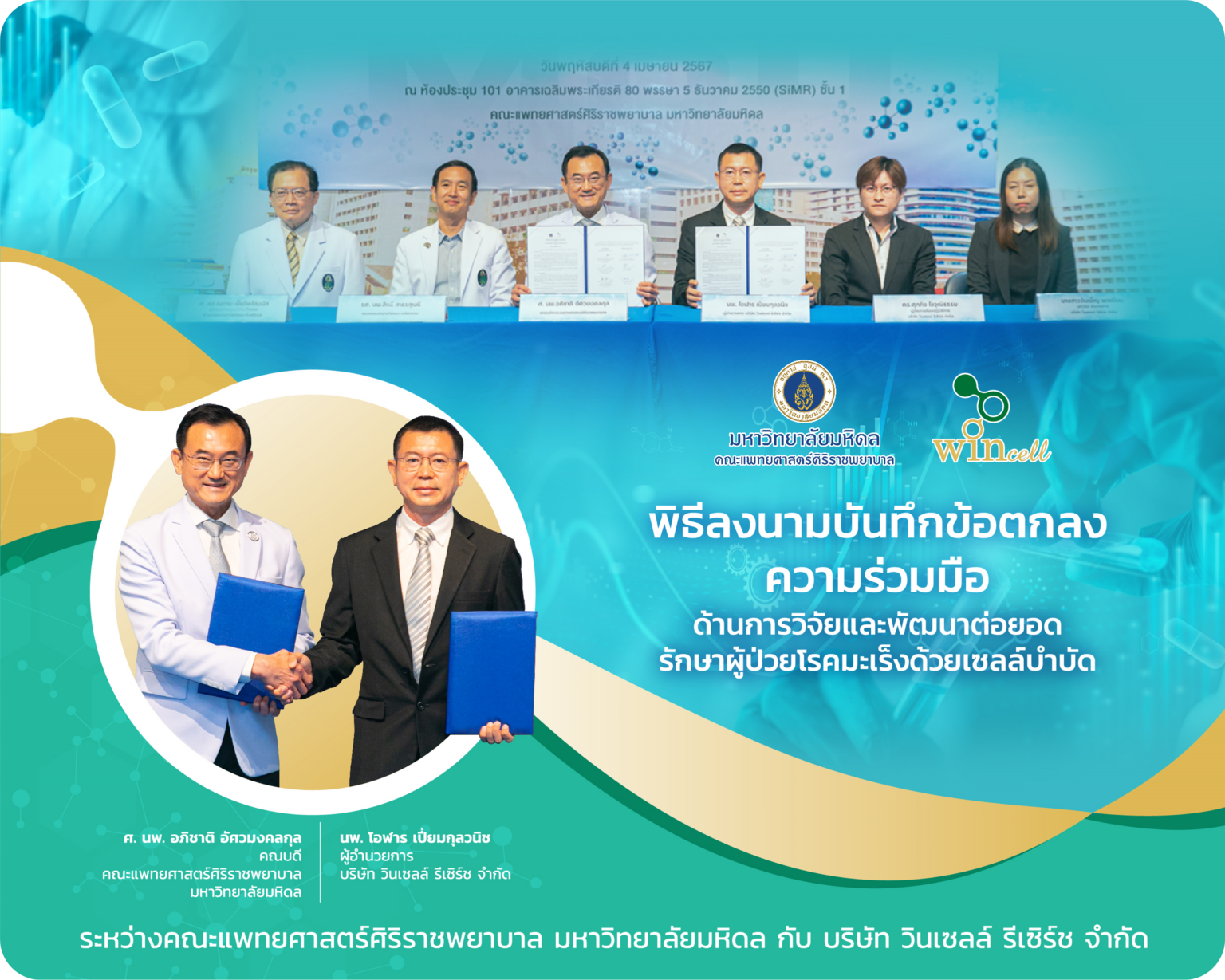
Bangkok, April 4, 2024 – The Faculty of Medicine Siriraj Hospital, Mahidol University, has officially entered into a Memorandum of Understanding (MOU) with Wincell Research Co., Ltd. to collaborate on the research and development of advanced cancer immunotherapy.
The primary objective of this partnership is to advance the body of knowledge surrounding cellular immunotherapy technologies and innovations. This includes establishing production protocols that adhere to Good Manufacturing Practice (GMP) standards and the regulations of the Thai Food and Drug Administration (FDA). Furthermore, the collaboration aims to propel clinical research to translate these laboratory breakthroughs into effective therapeutic applications for cancer patients.
The signing ceremony was presided over by Prof. Apichat Asavamongkolkul, M.D., Dean of the Faculty of Medicine Siriraj Hospital, Mahidol University. Distinguished attendees included:
Dr. Olar Piamkulvanich, M.D., Founder and CEO of Wincell Research Co., Ltd.
Assoc. Prof. Sith Sathornsumetee, M.D., Deputy Dean for Research and Innovation.
Prof. Pa-thai Yenchitsomanus, Ph.D., Director of the Siriraj Center of Excellence in Cancer Immunotherapy (SiCCI).
The event took place at Meeting Room 101, 1st Floor, His Majesty the King’s 80th Birthday Anniversary 5th December 2007 Building (SiMR), Siriraj Hospital.
Cellular Immunotherapy: The “Living Drug” Innovation
Cellular Immunotherapy represents a cutting-edge medical frontier where a patient’s own immune cells are isolated, then strategically stimulated, modified, and rigorously tested for their anti-tumor efficacy within a controlled laboratory environment. Once optimized and expanded, these cells are re-infused into the patient’s body.
Known as a “Living Drug,” this technology offers high precision and a robust safety profile. However, the high cost of importing such proprietary technology remains a significant barrier to patient access in Thailand. This strategic collaboration is therefore vital in fostering domestic innovation, cultivating specialized expertise, and ensuring that advanced, life-saving cancer treatments become more accessible to the Thai population through homegrown medical excellence.
Photo Credit: สาขาถ่ายภาพทางการแพทย์ สถานเทคโนโลยีการศึกษาแพทยศาสตร์